Russia is running short of potatoes.
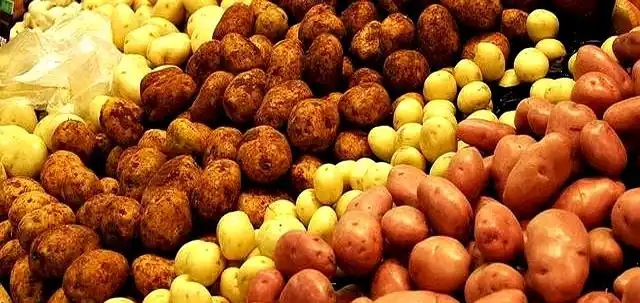
This major agricultural country, which boasts the world's most fertile black soil, is unexpectedly facing a shortage of supplies of its "second bread" this year and has to increase imports. Data from Russia's Federal State Statistics Service shows that potato prices in the first quarter of 2025 rose by 52% year-on-year, while statistics from China's General Administration of Customs indicate that China's potato exports to Russia increased 40-fold during the same period.
A bumper potato harvest in Russia last year led to a slump in market prices, with the purchase price dropping as low as 15 rubles per kilogram. Farmers' willingness to grow potatoes was dampened, and this year they have switched to planting corn and sunflowers, which offer more profit margins. Russia's Ministry of Agriculture predicts that domestic potato production will decrease by 30% in 2025, which is consistent with the data reported by Deutsche Welle that the harvest in the first quarter decreased by 12%.
Traditional import channels are facing their own difficulties. Belarus saw a nearly 10% reduction in potato harvest due to continuous rainy weather in spring. Egypt, affected by severe drought, has significantly reduced its export volume. At this time, the standardized planting bases in Tengzhou, Shandong Province, China, have played a key role, with over 800,000 mu (about 53,333 hectares) of potato fields ensuring a stable supply.
Logistics costs have become a key factor affecting prices. The purchase price of potatoes shipped from Shandong to Russia's Far East region is about 1.1 yuan per jin (0.5 kilogram). According to a report by Sputnik News Agency, after adding sea freight and customs clearance fees, the landed price is about 30 rubles per kilogram, which is still lower than the local market price.
Deep-seated problems in Russian agriculture are gradually emerging. Although there are large areas of uncultivated black soil in the Far East, there is a lack of necessary water conservancy facilities. When hit by drought last year, farmland without irrigation systems saw a nearly 30% reduction in production. Potatoes from the Siberian producing areas need to be transported to major consumer cities in the west, often requiring long-distance transportation of 6,000 to 7,000 kilometers.
Storage shortcomings are also prominent. Due to the lack of modern storage facilities, harvested potatoes often suffer heavy losses due to freezing or rot. A previous case of a Chinese enterprise investing in potato planting in Russia showed that about 50% of the harvest deteriorated due to improper storage. The drying process relies on expensive natural gas fuel, further increasing costs.
A new pattern has emerged in Sino-Russian agricultural trade. Data from the Far East Research Institute of Heihe University shows that China has entered the top three potato suppliers to Russia for the first time this year. In addition to potatoes, exports of storable vegetables such as Chinese cabbage and onions to Russia have also increased by about 70%.
This supply-demand relationship reflects the complementarity of the two economies. Russia has vast land resources but needs improved infrastructure and stable supply chains; China has mature planting technologies and a sound logistics network. The agricultural cooperation memorandum signed by the two countries in 2024 is producing practical results.
It is worth noting that differences in agricultural policies have led to different results. China implements a minimum purchase price policy for staple grains to ensure farmers' basic income. Russia, on the other hand, relies more on market regulation, resulting in greater annual fluctuations in the planting structure. Research from the Agricultural Economics Department of Moscow State University shows that this volatility may continue to affect Russia's food security.
It should be noted that changes in the international environment have accelerated the adjustment of trade patterns. After the Russia-Ukraine conflict, European exports of agricultural products to Russia have plummeted. Southeast Asian countries have reduced production due to climate impacts, making China the most reliable supplier. Russia's Ministry of Economic Development has listed agricultural product supply as a key guarantee area.
Currently, Russia is in a period where the supply of new and old potatoes is insufficient. It is expected that the supply pressure will ease after the autumn harvest. However, to fundamentally solve the problem of agricultural product supply, long-term investment in infrastructure and policy guarantees are still needed. Cooperation between China and Russia in the agricultural field may have just begun.
 Consultation Hotline:
008619853132542
Consultation Hotline:
008619853132542
 First class service
 Transparent pricing
 Abide by reputation